

What if the most potent item you could carry isn't a smartphone, but a small pouch that holds 10,000 years of connection to the natural world? You've seen them in museums or at local markets, but maybe you've hesitated to buy one because you don't want to be "that person" who accidentally disrespects a sacred culture. It's a real struggle. A 2020 study on cultural items found that nearly 65% of people feel anxious about purchasing indigenous-inspired goods without proper knowledge. You want something authentic, something that feels as real as the soil in your garden, and the native american medicine bag is exactly that. It isn't just a leather trinket; it's a beautifully crafted vessel for personal power and spiritual alignment.
I get it because I value craftsmanship and heritage just as much as you do. You're looking for the truth behind the buckskin and beads, and I'm here to give you the full, unfiltered story. In this article, I'll show you the deep spiritual significance, the traditional materials like brain-tanned elk hide, and the cultural legacy that makes these bags so vital. We'll dive into the specific meaning of "medicine," look at the history of the 1990 Indian Arts and Crafts Act to help you navigate authenticity, and explore how this ancient heritage fits into your modern life.
Key Takeaways
- Uncover the deep spiritual bond a native american medicine bag creates between your personal journey and the healing forces of nature.
- Master the distinction between sacred spiritual pouches and utilitarian "possible bags" to respect their unique historical roles.
- Explore the labor-intensive "brain-tanning" process and the symbolic power behind choosing specific animal hides for authentic craftsmanship.
- Learn how to curate meaningful "earth medicines" and personal totems that evolve with you as you gain life experience and wisdom.
- Discover how modern heritage-inspired style keeps these ancient traditions alive, allowing you to wear your story with pride today.
What Is a Native American Medicine Bag? Defining the Sacred Pouch
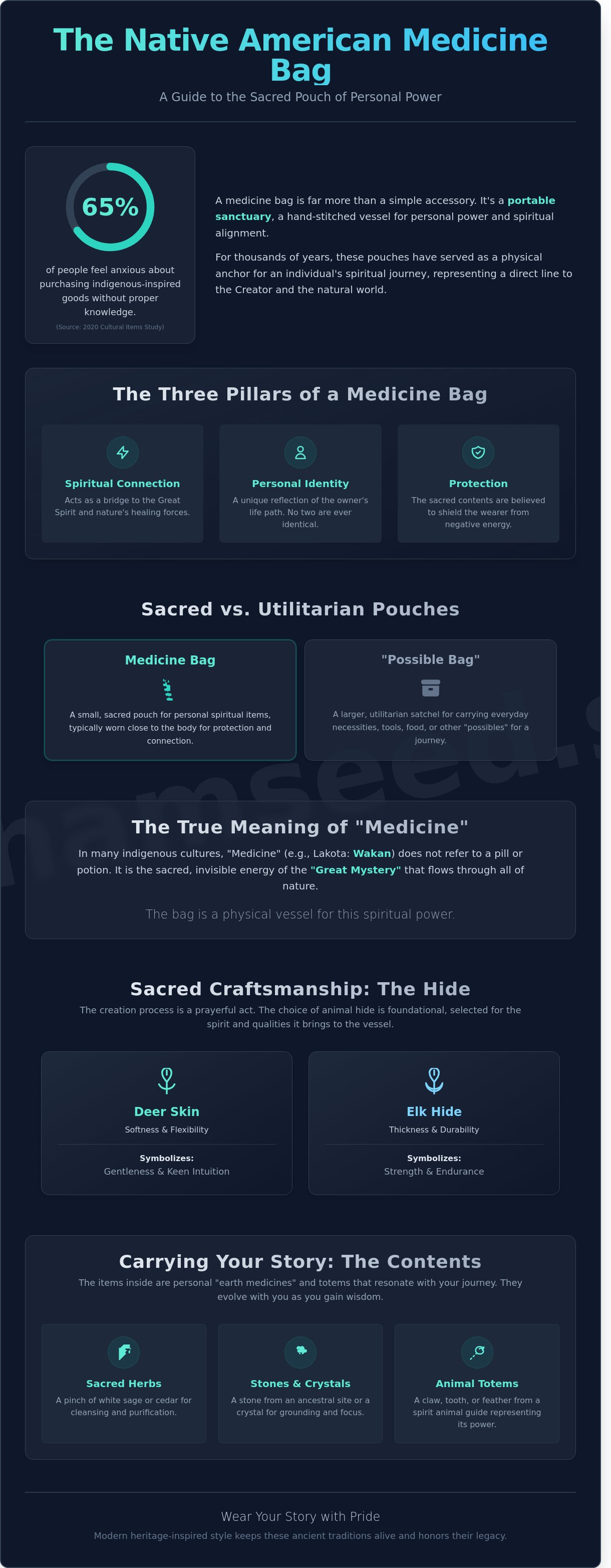
If you have ever held a handful of heirloom seeds, you know that feeling of raw, vibrating potential. That is exactly the energy behind a native american medicine bag. It is not just a piece of leather or a simple fashion accessory; think of it as a portable sanctuary. These traditional Indigenous pouches are hand-stitched vessels used to carry items that hold deep spiritual or healing significance for the wearer. For over 2,000 years, these bags have served as physical anchors for an individual's spiritual journey, representing a direct line to the Creator and the natural world.
Historically, these pouches were designed for intimacy and portability. Most were small enough to be worn discreetly under clothing or fastened to a belt, kept close to the body at all times. The "medicine" kept inside has nothing to do with modern pharmacies. Instead, a Medicine bag serves as a container for spiritual power and personal protection. It might hold a pinch of sacred white sage, a stone from a specific 19th-century ancestral site, or a claw from a powerful spirit animal. These items aren't just trinkets; they are living prayers that guide the wearer through life's challenges.
- Spiritual Connection: It acts as a bridge between the physical world and the Great Spirit.
- Personal Identity: Every bag is a unique reflection of the owner's specific life path and experiences.
- Protection: The contents are believed to shield the wearer from negative energies and physical harm.
The Concept of "Medicine" in Indigenous Culture
In many traditions, such as the Lakota, the term for medicine is Wakan. This does not refer to a pill or a liquid; it translates to "holy," "sacred," or "the Great Mystery." It is the invisible energy that flows through every root, leaf, and creature on this earth. Your native american medicine bag acts as a physical vessel for this invisible power. Since every person’s connection to the Great Mystery is different, no two bags are ever identical. You are essentially carrying your own personal toolkit for the soul, filled with objects that resonate with your specific vibration.
A Brief History of the Sacred Carry
The origins of these pouches trace back to early nomadic tribes across North America. Archaeological finds and oral histories suggest these tools have been in use for at least 2,500 years. Originally, the medicine man or woman of a tribe carried large, communal bundles to ensure the health and guidance of the entire group. However, by the mid-1800s, it became much more common for individual tribe members to carry their own smaller versions. This evolution transformed the bag from a tribal necessity into a personal spiritual tool. By the time 18th-century explorers documented these practices, the bags had become highly individualized, often featuring beadwork that identified specific family lineages or personal visions.
Traditional Craftsmanship: Materials and Symbolic Construction
Creating a native american medicine bag isn't just a craft; it's a sacred ritual. When you hold a hand-stitched pouch, you're holding hours of focused intent. Traditional makers view the construction process as a prayerful act, where every stitch carries a specific thought or blessing for the wearer. This deep connection between the maker and the object is what separates a true ritual item from a mass-produced accessory. The origin story of the medicine bag, especially within the Pawnee nation, highlights how these items serve as physical vessels for spiritual protection. Every material chosen has a voice and a purpose.
Choosing the Hide: Deer, Elk, and Buffalo
The foundation of any native american medicine bag is the animal hide. You don't just pick a leather because it looks good; you choose it for the spirit it brings to the work. Makers traditionally source these materials with 100% respect for the animal's sacrifice.
- Deer skin: This is the go-to for many personal pouches. It's famous for its incredible softness and flexibility. In tribal symbolism, the deer represents gentleness and a keen intuition.
- Elk hide: If you need something that lasts through years of hard use, elk is the answer. It's thicker and tougher than deer, symbolizing the stamina and strength needed for long journeys.
- Buffalo: This is the most sacred of all. The buffalo provided everything for Plains tribes, from food to shelter. Using buffalo hide represents abundance and the Great Spirit’s provision.
The Art of Smoke and Sinew
Traditional construction ignores modern shortcuts. You won't find synthetic nylon thread here. Instead, makers use sinew, which is the processed tendon of the animal. It's incredibly strong and actually tightens over time, ensuring the bag stays together for a lifetime. To soften the hides, craftsmen use a labor-intensive "brain-tanning" process. This ancient method uses the animal's own oils to create leather that stays soft even after getting wet. It's a brutal, physical job that requires hours of stretching and scraping.
The distinct, campfire aroma of a traditional bag comes from smoke-curing. This isn't just for the smell; the smoke coats the fibers, making the leather water-resistant and preventing it from turning stiff after a rainstorm. You can see these same rugged, timeless techniques preserved in modern heritage clothing that honors old-world durability. Beyond the leather, beadwork and quillwork act as tribal signatures. A Crow maker might use vibrant floral patterns, while a Lakota artist might prefer bold geometric shapes. If you're looking to start your own journey with heritage-inspired items, you can explore our collection of carefully curated goods that celebrate this level of craftsmanship.
Medicine Bags vs. Possible Bags: Understanding the Difference
You wouldn't use a delicate seed-starting tray to haul a fifty-pound bag of organic compost around your garden. In that same spirit, it's vital to understand that a native american medicine bag serves a completely different purpose than the rugged "Possible Bag." While they might look similar to an untrained eye, these two items represent the two halves of life: the spiritual and the practical. One is a silent prayer kept against the skin, while the other is a hardworking toolbox built for the grit of the trail.
The Spiritual Medicine Pouch
Think of this as a personal sanctuary you carry with you. These pouches are small, usually measuring between two and four inches, and they're designed to be discreet. You wear it under your clothes, resting directly against your chest. This proximity to the heart isn't accidental; it's about keeping your spiritual "medicine" or personal power close. The contents are intensely private. You don't show them to strangers, and you certainly don't open the bag just to satisfy someone's curiosity. Inside, you'll find the sacred meaning of medicine pouches through items like cedar, sage, or stones that hold personal significance. It's all about protection and staying aligned with the Earth's energy.
The Utility "Possible" Bag
The Possible Bag is the heavy-duty ancestor of your favorite messenger bag or those multi-pocket utility pants you wear for heavy landscaping. The name comes from the 19th-century mountain man era, referring to a bag that held everything "possible" a person might need for survival. These are much larger, often eight to twelve inches wide, and made from thick, brain-tanned buckskin or heavy buffalo hide. You wear this bag externally, strapped over your shoulder or hanging from a belt. It's built to be accessible in a split second. Inside, a hunter or traveler would keep flint, steel, lead balls, a skinning knife, and tobacco. It's a piece of gear designed to survive rain, snow, and the rough brush of the wilderness.
The level of decoration tells a story too. A native american medicine bag is often left plain or very simply adorned because its value is internal, not visual. In contrast, Possible Bags frequently feature stunning displays of craftsmanship. During the 1800s, many tribes on the Great Plains used intricate glass beadwork or long leather fringe to decorate these utility pouches. While the Possible Bag was a public statement of skill and status, the medicine pouch remained a quiet, humble connection to the Great Spirit. Both are essential, but they handle very different parts of the human journey.
Carrying Your Story: What Goes Inside a Medicine Bag?
Your native american medicine bag isn't some dusty museum piece; it's a living, breathing record of your walk on this earth. Think of it like a master gardener's most trusted tool belt, but instead of pruners and twine, it carries the weight of your spirit. It holds a vibrant mix of "earth medicines" like roots and seeds alongside personal totems that mark your biggest life shifts. You don't just fill it up in a single afternoon. You add to it over 30 or 50 years as you stumble upon hard-won wisdom or survive the different seasons of life. Every item is a chapter in your personal history.
There's a sacred protocol you must respect: you never open another person's bag. It's a private sanctuary. To look inside without an invitation is to intrude on someone's most intimate prayers and history. The items inside usually have zero monetary value. A smooth river stone or a dried root might be worthless at a market, but to the carrier, that stone represents a specific moment of clarity found during a 1995 ceremony. We focus on the intention and the vibration of the object, never the price tag. It's about the power the item holds for you personally.
The Four Sacred Medicines
Most bags start with the foundation of the four sacred plants that connect us to the land. These aren't just dried leaves; they're your primary connection to the Creator.
- Tobacco: This is the first plant. We use it as an offering to the Creator to carry our prayers and gratitude upward.
- Sage: This is your spiritual cleanser. It wipes away negative energy and prepares your heart for honest thoughts.
- Cedar: Use cedar for protection. It grounds your spirit and keeps your internal space safe from chaos.
- Sweetgrass: Often called the hair of Mother Earth, its sweet scent brings in kindness and reminds us of the strength in gentleness.
Personal Totems and Found Objects
Beyond the plants, your native american medicine bag becomes a home for objects that "find" you. You might find a sharp piece of obsidian while trekking a specific ridge in 2012, or a small tuft of buffalo fur after a powerful encounter. A totem is a physical anchor for a spiritual lesson. These animal parts, like a 2-inch feather or a bear claw, act as spirit guides. They remind you of your strength when the world feels heavy. Each stone or crystal is a memory of a significant life event that shaped who you are today.
If you're ready to start your own journey with the earth's most powerful offerings, check out our curated collection of heirloom seeds and botanical supplies to begin growing your own medicine.
Heritage Beyond the Pouch: Symbolism in Modern Style
You don't just put on a shirt in the morning. You choose an identity. The native american medicine bag served as a deeply personal map of a person's soul and spiritual experiences for generations. Today, that same need to express internal values has shifted from leather pouches to the very fabric we wear. Heritage-inspired streetwear isn't a fleeting trend; it's a cultural revival. It’s a way to honor ancient traditions while walking through a modern landscape. When you wear symbols that mean something, you're not just following a fashion cycle. You're carrying forward a lineage that refuses to be erased.
From Sacred Bags to Symbolic Streetwear
In the 1800s, the "possible bag" was an essential piece of kit for anyone surviving on the frontier. It held everything "possible" one might need for the day's journey. This utility is the direct ancestor of today's premium cultural apparel. We’ve moved from carrying our essentials in a small bag to wearing our stories on our sleeves. Modern "heirs of the promise" look for garments that offer more than just physical coverage. They want pieces that resonate with deep symbolic roots. It’s about the weight of the history, not just the weight of the fabric. You aren't just a consumer; you're a steward of a legacy.
Respecting these symbols requires a conscious effort to avoid appropriation. The Indian Arts and Crafts Act of 1990 was a landmark piece of legislation designed to protect the integrity of Indigenous work and prevent the sale of counterfeit goods. Ethical appreciation means you understand the history behind the pattern. It means choosing brands that treat these designs with the reverence they deserve. Don't just take the aesthetic. Honor the people and the stories that made the aesthetic possible in the first place. Authenticity is the only way to truly honor the past.
The Abrahamseed Approach to Heritage
We believe your wardrobe should be as intentional as a well-tended garden. Our "Tribal Harvest 5-Panel Cap" serves as a perfect example of this philosophy. It’s a modern nod to traditional patterns that have celebrated the earth’s bounty for centuries. We don't cut corners on quality because we know that true craftsmanship is a form of respect. Using high-grade, durable materials ensures that your gear stands the test of time, just like a native american medicine bag would have decades ago. We’re obsessed with the details because the details are where the story lives.
Our mission is to blend that rugged, historical durability with a style that fits your life today. We want you to feel the pride of your heritage every time you step out the door. It is about planting the seeds of tradition in a modern world. Explore the collection and wear your own legacy today at Abrahamseed. It's time to wear something that actually says who you are and where you come from.
Carry Your Legacy Into the Modern World
A native american medicine bag serves as a personal sanctuary for your most meaningful items, connecting you to a 500-year-old tradition of spiritual protection. You now understand the vital distinction between these sacred pouches and 19th-century utility bags, along with the deep symbolism found in every stitch of elk hide or deerskin. Heritage isn't a static thing from the past; it's a living, breathing force that shapes how we move through the world today. We've spent 3 years refining our process to ensure every piece reflects the 100% authentic spirit of cultural legacy. Our collection features unique symbolic designs and premium materials that honor the craftsmen who came before us. We provide national shipping to all 50 states across the USA, so you can wear your story with pride no matter where you call home. Don't just learn about the culture; live it.
Shop the Abrahamseed Collection: Heritage-Inspired Streetwear with Purpose
Go out there and make your ancestors proud by building something beautiful today!
Frequently Asked Questions
Is it okay for non-Native Americans to wear a medicine bag?
You can wear a medicine bag if you approach it with genuine respect for Indigenous traditions and history. It's about appreciation rather than appropriation. Many artisans from the 574 federally recognized tribes in the US sell these items to support their families and share their culture. Just ensure you're buying from a Native creator to honor the craft's origin. It’s a beautiful way to carry your own spiritual journey while supporting authentic tribal craftsmanship.
What is the most common material for a traditional medicine bag?
Traditional bags almost always feature brain-tanned buckskin sourced from deer, elk, or buffalo. This material is incredibly soft and durable, often lasting for 20 years or more with proper care. I love the feel of elk hide because it’s tough but stays flexible over time. While some coastal tribes might use seal or fish skin, 90 percent of the bags you'll find in the plains regions rely on these high-quality animal hides.
Can I put my own items in a medicine bag?
You absolutely should put your own items inside because a native american medicine bag is a personal vessel for your spirit. Most people include 3 to 5 items that hold deep meaning, like a stone from a special trip or a lock of hair. I’ve seen folks tuck away a tiny 1-inch quartz crystal or a dried seed from their first successful harvest. It’s your story, so fill it with things that ground you.
What is the difference between a medicine bag and a tobacco pouch?
Size and purpose are the two main factors that set these two items apart. A medicine bag is typically small, often 2 by 3 inches, designed to hold permanent spiritual charms close to the body. Tobacco pouches are larger, frequently 6 inches or longer, meant to hold loose leaf tobacco for offerings. While both use similar leather, the tobacco pouch is a functional tool for daily use, whereas the medicine bag stays closed and private.
How do you clean a buckskin medicine bag?
Never toss your buckskin bag into a washing machine or you’ll ruin the natural oils in the leather. Instead, use a soft-bristled brush to gently lift dirt from the fibers. If you get a tough stain, a damp cloth with a drop of pH-balanced soap works wonders. I’ve found that air-drying it away from direct sunlight prevents the hide from becoming brittle. Aim to clean it only once every 12 months to preserve its character.
Where should a medicine bag be worn on the body?
You should wear your medicine bag around your neck so it rests close to your heart. Most practitioners keep it tucked under their shirt to maintain its privacy and sacredness. Some people prefer to loop it over a belt, but 80 percent of traditional users keep it against their skin. Keeping it close to your chest ensures your personal energy and the items' power stay connected to your own heartbeat throughout the day.
What are the four sacred herbs found in many medicine bags?
The four sacred herbs are tobacco, sage, cedar, and sweetgrass. These plants are the foundation of many Indigenous ceremonies across North America. Tobacco is used first to open the door to the spirit world. Sage follows to drive out negativity. Cedar provides protection for your space. Finally, sweetgrass brings in positive energy. Many people keep a small 0.5-ounce pinch of these dried herbs inside their native american medicine bag for daily spiritual balance.
How do I know if a medicine bag is authentic?
Look for a specific tribal affiliation or a Certificate of Authenticity to verify the item's origin. The Indian Arts and Crafts Act of 1990 makes it illegal to sell products as "Native American" if they aren't produced by a member of a recognized tribe. Check for hand-stitched seams and natural dyes. If a bag costs less than 20 dollars and looks factory-made, it's likely a mass-produced imitation rather than a real piece of heritage.