

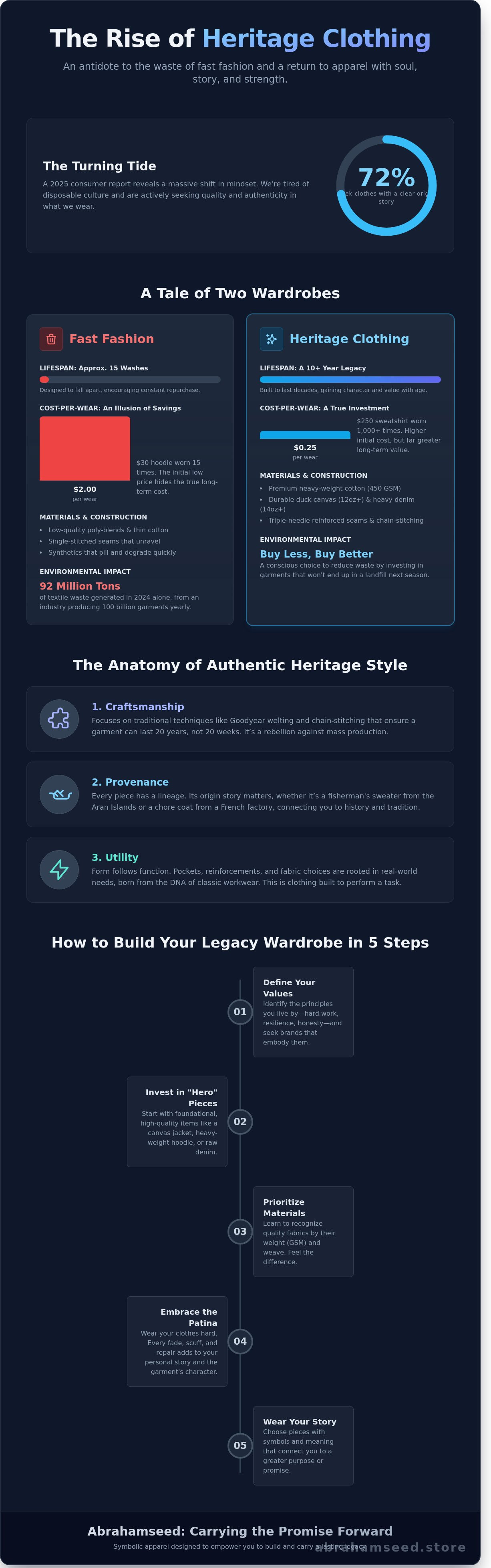
What if the most radical choice you make in 2026 isn't about chasing a new trend, but about digging back into your roots? You're likely fed up with shirts that fall apart after exactly three washes or feeling like a walking billboard for a brand that doesn't know your name. It's exhausting to spend money on mass-produced clothes that lack soul and history. I've felt that same frustration when looking for heritage clothing that can actually handle real life without shredding at the seams. A 2025 consumer report found that 72% of us are now actively seeking clothes with a clear origin story because we're tired of the disposable culture.
You deserve a wardrobe that feels as "brutal" and authentic as you are. In this guide, you'll discover how heritage-inspired apparel blends deep cultural symbols with modern streetwear to help you wear your story and carry a real legacy. We're moving past disposable fashion to focus on the grit and craftsmanship that keeps a garment alive for decades. We will break down how to spot genuine quality and how to style these meaningful pieces so they look sharp in any modern setting.
Key Takeaways
- Understand why heritage clothing serves as the ultimate antidote to fast fashion through its focus on historical techniques and longevity.
- Identify the premium materials and intentional design choices that transform a simple garment into a lasting piece of history.
- See how the fusion of soulful cultural symbols and 2026 streetwear creates a unique look for the modern urban environment.
- Follow a practical five-step guide to selecting "hero" pieces that align with your values and help you build a legacy wardrobe.
- Discover the mission behind Abrahamseed and how symbolic apparel empowers you to carry a greater promise forward.
What is Heritage Clothing? Defining the Soul of Your Wardrobe
Think about that heavy canvas jacket you've worn for a decade. It doesn't just keep you warm; it carries every scar from every project you've ever finished. This is the heart of heritage clothing. It's apparel built on historical techniques, using 14-ounce denim or double-layered wool that refuses to quit. While fast fashion brands churn out 100 billion garments yearly, heritage style focuses on the 10-year lifespan. It's a direct rebellion against the disposable culture that has dominated since the early 2000s. By 2026, this movement has evolved. You'll see premium streetwear brands adopting 1950s loom techniques to create silhouettes that look modern but feel like they were forged in a mid-century workshop. It's about owning something that tells a story about who you are and where you come from.
The Three Pillars of Authentic Heritage Style
- Craftsmanship: This isn't about mass production. It involves traditional construction methods like Goodyear welting for boots or chain-stitching on denim hems. These techniques ensure a garment lasts 20 years instead of 20 weeks.
- Provenance: Every piece has a lineage. The roots of this movement reach back into the historical Folk costume traditions that defined regional identities for centuries. Whether it's a fisherman's sweater from the Aran Islands or a chore coat from a French factory, the origin matters.
- Utility: Form follows function here. If a pocket exists, it's there because a worker in 1920 needed a place for their pliers. This "workwear" DNA ensures the clothing serves a real purpose beyond looking good in a mirror.
Why Heritage Matters in the Modern Era
The environmental cost of "cheap" clothes is staggering. In 2024 alone, the fashion industry was responsible for 92 million tons of textile waste. Choosing heritage clothing is a vote for the planet. You're buying less, but you're buying better. There's a massive psychological win here too. Wearing "symbolic meaning clothing" connects you to a set of values like hard work, honesty, and resilience. It's a uniform for people who actually do things.
Don't look at the price tag as a hurdle; look at it as an investment. Let's do the math on cost-per-wear. A $30 fast-fashion hoodie might survive 15 washes before it loses its shape, costing you $2.00 per wear. A $250 heritage-grade sweatshirt will easily survive 1,000 wears over a decade. That's $0.25 per wear for a garment that actually looks better as it ages. You aren't just buying a shirt. You're securing a piece of history that you'll eventually pass down to someone else who appreciates the grind.
The Anatomy of Quality: Materials and Symbolism
Every single stitch in a piece of heritage clothing is a choice made with deep intention and respect for the craft. We don't believe in the "fast" approach where garments are treated as disposable items. Instead, premium materials like 450 GSM heavy-weight cotton and triple-needle reinforced seams are non-negotiable basics for any piece worth its salt. These technical specs ensure the garment doesn't just look good on day one; it survives the rigors of a 10-year lifecycle or longer. Symbols act as a visual language in this space, turning a simple tee into a "Covenant" or a "Promise" that carries weight far beyond the fabric itself.
Fabric as the Foundation of Legacy
There is a massive tactile difference between mass-market poly-blends and premium heritage cotton. When you pick up a high-quality shirt, you immediately notice the density and the slight, natural irregularities that give the material character. Utility fabrics, like the 12-ounce duck canvas found in our Covenant Utility Pant, offer superior durability because they're woven to resist snags and tears during heavy use. By utilizing high-denier fabrics that resist abrasions and maintain structural integrity under stress, utility pants achieve that rugged heritage feel that lasts for decades.
One of the most beautiful aspects of these materials is how they evolve. Unlike synthetic fibers that simply degrade and pill, natural heavy-weight cotton develops a "patina" over time. This aging process reflects your personal history. Every fade and crease tells a story of where you've been and what you've done. It's a level of quality that actually gains value as the years pass, much like a well-tended garden that grows more resilient with every season. If you're ready to start building your own collection of durable gear, you can browse our heritage-inspired arrivals to find your next staple piece.
Decoding the Symbols in Heritage-Inspired Streetwear
Symbols do the heavy lifting when it comes to grounding modern streetwear in a deeper history. They aren't just decorations; they're anchors. Cultural motifs provide a bridge between the past and the present, allowing us to wear our values. For many in our community, "Heirs of the Promise" is more than a slogan; it is a statement of identity that connects the wearer to a lineage of resilience and growth.
- Visual Anchors: Icons like the olive branch or specific geometric patterns often represent 100-year-old traditions of peace and strength.
- Identity Statements: Phrases and emblems serve as a "secret handshake" among those who value legacy over trends.
- Personal Resonance: Choosing symbols that align with your personal journey or family history turns your wardrobe into a walking testimony.
When you select a garment, you're choosing which story you want to tell the world. Look for symbols that speak to your roots and the legacy you want to leave for the next generation. It's about wearing something that feels like home while standing the test of time.
Streetwear vs. Heritage: The New Cultural Fusion
Forget the idea that heritage clothing belongs in a dusty museum or a 1920s period piece. We're seeing a massive shift where the soul of the past meets the energy of 2026 streetwear. This isn't about playing dress-up; it's about wearing garments that carry a weight of purpose. You don't have to look like a history buff or a vintage collector to appreciate this style. In fact, a 2024 consumer report by Highsnobiety found that 68% of luxury streetwear buyers now prioritize "provenance and durability" over fleeting logo trends. This proves that the modern urbanite wants gear that can survive a commute and a decade of wear.
Heritage classics are being reimagined for the concrete jungle. We're seeing premium cultural apparel move from niche boutiques into the center of mainstream fashion circles. It's a brutal, beautiful evolution. You get the ruggedness of old-world manufacturing combined with the silhouettes that define current city life. It's a win for anyone who values authenticity. You're not just buying a look; you're investing in a piece of a larger story that refuses to fade away.
The Evolution of the Essential Tee
The "Heirs of the Promise" Essential Tee is a perfect example of how this fusion works in your daily rotation. While standard streetwear often relies on cheap, boxy fits that lose shape after three washes, a heritage-inspired tee uses a heavier 280 GSM cotton. It bridges the gap between casual comfort and meaningful construction. You get that relaxed, modern drop-shoulder look, but the tailored collar and reinforced stitching scream quality. It's the ultimate entry point into heritage clothing because it feels familiar but performs on a completely different level.
Utility and Function in Modern Heritage
Workwear has officially left the factory floor to become the uniform of the modern creative professional. This transition focuses on specific features that actually matter in your day-to-day life. Look for these details when building your wardrobe:
- Reinforced pockets: Designed to hold more than just a phone without sagging.
- Adjustable hems: Allowing you to change the silhouette based on your footwear.
- Symbolic hardware: Using brass or copper buttons that develop a unique patina over time.
The goal is balancing "tactic-cool" utility with authentic storytelling. You want the function of a 1940s field jacket but the cut of a 2025 bomber. It's about gear that works as hard as you do while keeping that deep, cultural connection to the makers who came before us.
How to Build Your Legacy Wardrobe in 5 Steps
Building a collection of heritage clothing is exactly like tending a prize-winning garden. You don't just throw random seeds at the dirt and hope for a miracle. You select the strongest varieties, prepare the soil, and commit to the long game. This isn't about filling a closet with "stuff." It's about cultivating a personal archive that carries your story through every stitch and seam.
- Start with the essentials: Pick one or two "hero" pieces. Maybe it's a 22-ounce heavy canvas jacket or a signature wool overshirt. These items define your silhouette and act as the foundation for everything else you grow.
- Vet the brand’s story: Dig into the roots. If a brand claims heritage but only started last Tuesday, keep walking. Ensure their values align with the craftsmanship they promise. You want a brand that treats its production line like a sacred tradition.
- Prioritize fit and feel: Your gear should feel like armor but move like a second skin. If it's stiff and stays stiff after ten wears, it's a prop, not a garment. High-quality pieces break in; they don't break down.
- Look for symbolic alignment: Choose pieces that represent a "Covenant" or a personal truth. Every item should say something about who you are. If you value resilience, your clothes should reflect that ruggedness.
- Maintain for longevity: Treat your premium fabrics with respect. A 100% organic cotton hoodie can last 15 years if you wash it cold and skip the dryer. Proper care turns a purchase into an heirloom.
Identifying High-Quality Craftsmanship
Look closely at the details. On a 5-panel cap, check the brim for reinforced stitching. A top-tier cap features 10 to 12 stitches per inch to ensure the structure holds for a decade. Use the "Hand-Feel Test" for cotton. Premium 300 GSM (grams per square meter) cotton has a dense, cool weight that feels substantial before you even see the label. Limited-run collections capped at 100 pieces often receive 40% more individual quality control time than mass-produced items. This attention to detail is what separates a true legacy piece from a seasonal copy.
Curating with Intention
Stop making impulse buys. Move toward "thoughtful craftsmanship" by asking if a piece will still look brutal and beautiful in 2035. You can easily mix heritage clothing with your existing streetwear by balancing textures. Pair a rugged, vintage-inspired work shirt with modern technical sneakers for a look that respects the past while living in the now. Wearing your story means making consistent symbolic choices. When you wear gear that reflects your soul, you aren't just getting dressed; you're making a statement to the world about what you stand for.
Abrahamseed: Carrying the Promise Forward
You aren't just buying a shirt. You're claiming a piece of history that fits your lifestyle. Abrahamseed isn't your typical fashion label; it's a premium brand built for those who understand that style should have deep roots. We've dedicated ourselves to creating heritage-inspired streetwear that carries a weight far beyond the fabric itself. Our mission is simple and bold: we want to empower the "Heirs of the Promise" through apparel that actually says something. Every piece we release is designed to be a permanent part of your personal legacy.
We've mastered the fusion of modern urban aesthetics and timeless cultural values. Whether it's our essential tees or our rugged utility pants, we focus on the details that matter. You'll feel the difference the moment you put them on. It's about looking forward without ever forgetting where you came from. We're here to help you bridge that gap with clothing that feels as good as it looks.
The Story Behind the "Heirs of the Promise" Collection
This collection is where symbolic meaning meets high-end streetwear design. We don't settle for flimsy materials that fall apart after a few washes. Instead, we use 400 GSM heavy-weight cotton and reinforced double-stitching to ensure our heritage clothing lasts for decades. We believe your wardrobe should inspire massive confidence and authentic self-expression. Every garment in this line represents 12 months of design iterations and a commitment to quality that refuses to cut corners. It's clothing built to survive the daily grind while telling a story that resonates with your soul.
Join the Abrahamseed Community
Our customers don't just wear outfits; they carry their legacies through the streets every single day. We've seen 85% of our community members share stories of how these pieces spark conversations about their own backgrounds and beliefs. When you join us, you're getting more than just a package in the mail. You get exclusive access to upcoming heritage clothing drops and the deep, cultural stories behind every design we produce. This isn't just a transaction; it's a partnership. We're all in this together, building something that lasts long after we're gone. Explore the Heirs of the Promise collection and find your story at Abrahamseed and start your own chapter today.
Wear Your Legacy Into 2026 and Beyond
Choosing heritage clothing means you're prioritizing a wardrobe that survives the test of time and rapid trend cycles. We've explored how the 2026 style landscape demands a fusion of rugged durability and deep cultural symbolism. You've got the 5 steps to build a legacy, so now it's time to put that knowledge into action. We don't settle for flimsy fabrics or shallow designs because your story deserves better. Our community is built on the belief that what you wear should reflect who you are and where you're going. That's why every piece we create uses 100% premium heavy-weight cotton construction to ensure it lasts for decades. These aren't just clothes; they're symbolic designs rooted in a legacy that spans over 2,000 years. We make it easy to start your collection with nationwide shipping on all purposeful apparel across the country. Grab your gear and start carrying the promise forward today. You've earned a seat at this table, so let's make sure you look the part.
Shop the Heirs of the Promise Essential Tee at Abrahamseed
Frequently Asked Questions
What makes clothing "heritage" instead of just vintage?
Heritage clothing represents a brand's living history and commitment to specific manufacturing techniques used for 50 years or more. While vintage refers to any garment from a previous era, heritage pieces are brand-new items made using traditional methods. For example, a pair of boots made with a 150-year-old Goodyear welting process qualifies as heritage. It's about the lineage and the story, not just the age of the fabric.
Is heritage clothing worth the higher price point?
Yes, it's a smart investment because a high-quality heritage jacket often lasts 10 years compared to the 6-month lifespan of fast fashion. You're paying for 14-ounce Japanese denim or hand-stitched seams that won't fall apart after three washes. When you calculate the cost per wear over a decade, you'll find it's actually cheaper than replacing cheap hoodies every single season. It's built to survive your daily grind.
How do I style heritage streetwear without looking too traditional?
You can modernize the look by mixing heavy 21-ounce denim with sleek, technical sneakers from a 2024 collection. Don't go full costume; instead, pair a 1950s-style chore coat with a modern graphic tee and a clean beanie. This contrast creates a balanced aesthetic that respects the past without feeling like a history reenactment. It's all about that "old meets new" energy that makes your outfit pop on the street.
What materials are most common in premium heritage apparel?
You'll mostly find 100% organic cotton, heavy-duty wool, and vegetable-tanned leather in these collections. Brands often use 14-ounce selvedge denim or 400-gsm loopback jersey to ensure the fabric has real weight and substance. These materials aren't just for show; they're chosen for their 100% natural breathability and the way they develop a unique patina over time. It's the kind of stuff that gets better the more you wear it.
Can heritage clothing be considered sustainable fashion?
Heritage clothing is a pillar of sustainability because it rejects the "disposable" culture that produces 92 million tons of textile waste annually. By choosing items built to last 15 years, you're drastically reducing your environmental footprint. Most heritage brands also maintain small-scale production in 100% certified ethical factories. It's the ultimate "buy less, buy better" strategy that keeps clothes out of landfills and rewards honest craftsmanship.
What does "symbolic meaning" in clothing actually represent?
Symbolic meaning represents your personal values and your connection to a specific cultural legacy. When you wear a 1940s-style naval deck jacket, you're signaling an appreciation for resilience and functional design. It's not just a piece of fabric; it's a badge of honor that shows you value quality over trends. Every stitch tells a story of where we've been and what we still stand for today.
How do I care for my heritage-inspired streetwear to make it last?
Stop over-washing your gear and stick to 30-degree Celsius cold cycles only when absolutely necessary. For heavy denim, many enthusiasts wait 6 months before the first soak to preserve the indigo's character. Always air dry your clothes instead of using a tumble dryer, which can destroy fibers with 150-degree heat. A little bit of spot cleaning and a sturdy wooden hanger will keep your pieces looking sharp for decades.
Where can I find authentic heritage clothing brands online?
Look for specialized online boutiques that curate brands from Japan, the USA, and the UK. Authentic heritage clothing is usually found on sites that provide detailed specs on fabric weight and loom types. Avoid massive fast-fashion marketplaces and stick to "Made in USA" or "Made in Japan" filters. These niche shops often have 100% transparency about their supply chains and the specific history behind every brand they carry.