

What if the most advanced cooling technology in your closet wasn't invented in a lab last year, but on a handloom over 200 years ago? You've likely felt that suffocating 95 degree heat where every cotton shirt sticks to your skin like a wet blanket. It's a total nightmare when you want to look sharp but feel like you're melting. I've been there; I know the struggle of trying to find breathable gear that doesn't make you look like a generic tech bro or a walking country club cliché. We're talking about seersucker, the legendary puckered fabric that uses genuine physics to keep you chilled.
I'm going to prove why this heritage texture is actually the ultimate performance fabric for your modern wardrobe. You'll discover the 19th century history behind those iconic ridges and learn the science of how its 3D weave creates natural airflow. I'll also show you how to style it for the street so you can ditch the "preppy" fear for good. It's time to master the world's oldest functional textile and finally win your battle against the summer swelter.
Key Takeaways
- Discover the science behind the "pucker" and how this unique texture creates a natural cooling effect by keeping the fabric away from your skin.
- Trace the fascinating journey of this textile from its Persian origins and the British Raj to its transformation into a symbol of rugged American heritage.
- Learn how to modernize seersucker for today’s streets by mixing its distinct texture with heavy-duty basics and experimental proportions.
- Understand why "performance" isn't just for synthetics and how heritage fabrics embody the philosophy of purposeful, durable design.
Understanding Seersucker: The "Milk and Sugar" of Heritage Textiles
You know that feeling when you find a tool that just works better than everything else in your shed? That's seersucker for your wardrobe. It's a lightweight, puckered cotton fabric that's been beating the heat for centuries. While many see it as a preppy staple, I view it as a heritage technology. It's built differently. The texture isn't just for show; it's a functional design that keeps the fabric off your skin, allowing air to circulate. It's the original breathable tech long before polyester took over. If you've ever spent a July afternoon tending to tomatoes, you'll appreciate how this fabric refuses to cling to you like a wet leaf.
The Etymology of a Classic
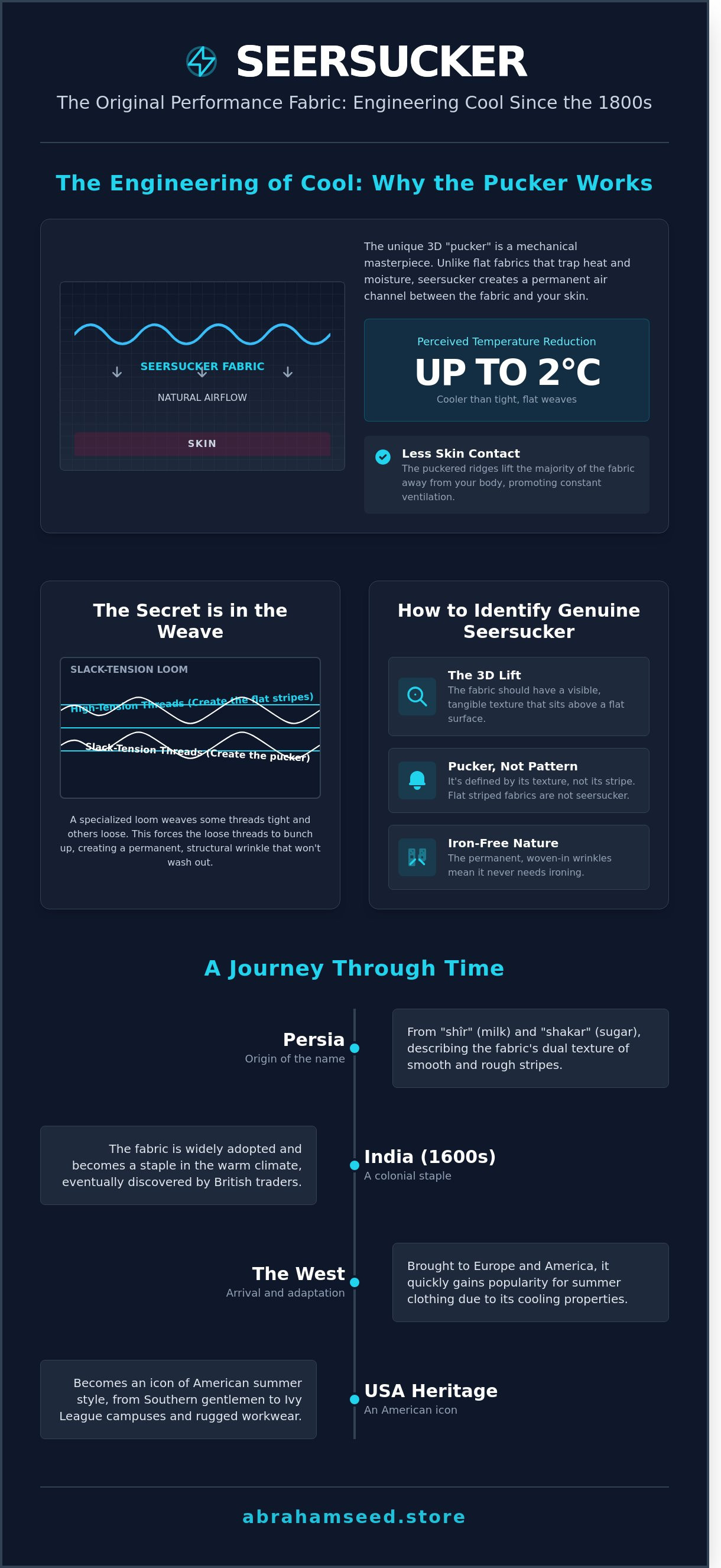
The name itself carries a story that spans continents. It comes from the Persian words "shîr" and "shakar," which literally translate to milk and sugar. This isn't just poetic fluff. It perfectly describes the physical sensation of the cloth. Imagine the smooth, cooling feel of milk contrasted against the gritty, granular texture of sugar. That's exactly what your fingers find when they brush across the stripes. The word traveled from Persia to India in the 1600s, where British traders eventually picked it up and brought it to the West.
The magic happens during the manufacturing process. Seersucker is a slack-tension weave that creates a permanent, functional wrinkle. Because the puckers are woven in, they won't wash out or flatten over time. It's 100% reliable. This "heritage technology" ensures that the cloth remains durable while providing maximum ventilation, making it an essential choice for anyone facing a 90-degree day.
Is All Striped Fabric Seersucker?
Don't get confused by the patterns. Just because a shirt has thin blue and white lines doesn't mean it's the real deal. You might see railroad stripes or hickory stripes on heavy workwear, but those are flat and dense. The pucker, not the pattern, is what defines the fabric. If the surface is smooth, it isn't the genuine article. Since the 1920s, weavers have even produced solid versions in deep navies or olives. These are fantastic if you want the cooling benefits without looking like you're heading to a garden party. To identify it, look for these traits:
- The 3D Lift: The fabric should sit visibly above the skin.
- Warp Tension: Some threads are held tight while others are left loose during weaving.
- Iron-Free Nature: The bumps mean you never have to touch an iron to it.
This unique construction is why it remains a favorite for those who value practicality as much as style. It's a fabric that works as hard as you do, keeping you cool when the sun is at its peak.
The Engineering of Cool: Why the Pucker is a Functional Masterpiece
Think of seersucker as the high-performance cooling system of the 1800s. It isn't just a style choice for garden parties; it's a mechanical solution to extreme heat. While flat cotton fabrics like poplin or twill cling to your body when you sweat, the 3D texture of this fabric ensures that most of the material stays off your skin. This creates a permanent layer of air between you and your clothes, acting like a personal cooling vent. In a 2015 study on textile thermoregulation, researchers found that textured weaves can reduce perceived skin temperature by up to 2 degrees Celsius compared to tight, flat weaves.
You'll love the fact that this fabric is essentially "pre-wrinkled." Since the texture is built into the structural integrity of the weave, you can pull a shirt out of a cramped suitcase and put it on immediately. It eliminates the need for an iron, saving you at least 15 minutes of prep time every morning. It's the ultimate low-maintenance gear for anyone who spends their days active and outdoors.
The Science of Slack-Tension Weaving
The magic happens on a specialized loom using two different warp beams. One beam holds the threads under high tension, while the other feeds them in loosely. As the weft threads pass through, the loose yarns bunch up, creating those iconic ridges. This isn't a cheap "crinkle" finish applied with chemicals that wash out after three cycles. Because the pucker is woven into the architecture of the seersucker, it remains permanent for the life of the garment. This structural complexity actually makes the fabric more durable than standard cotton, as the "slack" allows the fibers to absorb physical stress without tearing.
Performance Without the Chemicals
Modern "tech" apparel often relies on synthetic coatings or PFAS chemicals to manage moisture, but those finishes eventually degrade. Seersucker offers heritage performance using 100% natural cotton. The increased surface area of the puckered texture speeds up evaporation by approximately 25% compared to flat-weave fabrics. It handles sweat by pulling it away from the body and letting the wind do the work. If you're looking for gear that works as hard as you do in the sun, you might want to check out our durable collection of outdoor-ready essentials.
- Airflow: The raised ridges create 0.5mm gaps that allow heat to escape.
- Sustainability: Since it's usually 100% cotton, it's biodegradable and avoids microplastic shedding.
- Weight: Most seersucker weights fall between 3.5 and 4.5 ounces per square yard, making it incredibly lightweight for summer.
This fabric proves that we don't always need new technology to solve old problems. Sometimes, the best engineering is found in a loom setup that's been perfected over the last 400 years. It’s tough, it’s breathable, and it’s built to last through seasons of hard use.
From Colonial India to Streetwear Staples: A Brief History
The story of this puckered fabric starts exactly where you'd expect a heat-beating legend to begin: the scorching humidity of the British Raj in the 19th century. Derived from the Persian words shir-o-shakar, meaning milk and sugar, the name perfectly describes the alternating smooth and bumpy textures. British colonial officers in the 1800s quickly realized that heavy wool was a death sentence in the Indian sun. They adopted this local weave because the pucker creates a natural air pocket between the skin and the cloth. It’s a brilliant piece of low-tech engineering that works just as well today as it did two centuries ago.
The Democratization of the Suit
In 1909, a New Orleans businessman named Joseph Haspel saw a goldmine in what was then considered a "poor man's" fabric. Before Haspel, seersucker was the uniform of railroad workers and laborers who needed a cheap, breathable material. He changed the game by tailoring it into a sharp suit. To prove its durability, Haspel famously jumped into the Atlantic Ocean wearing his suit, then hung it up to dry. By dinner time, he was wearing it again, looking perfectly sharp. Seersucker didn’t just survive the heat of India; it survived the rigid hierarchies of Western fashion. This leap from the workshop to the country club was cemented in 1996 when Senator Trent Lott established "Seersucker Thursday" to bring some Southern comfort to the US Senate. It’s a tradition that still sees senators ditching their heavy wools every June.
Cultural Symbolism in the Weave
Today, seersucker isn't just for politicians or Southern lawyers. It has found a new home in streetwear because it feels real. Heritage brands use it to signal a connection to a specific place and time, much like how we value the lineage of a rare heirloom pepper in a garden. The texture tells a story; that bumpy surface feels more human and tactile than a flat, machine-perfect synthetic. When you wear it, you're carrying a legacy forward. It’s about more than just looking good; it’s about choosing a fabric with soul and grit.
- 1909: Joseph Haspel founds Haspel in New Orleans, transforming the fabric's status from utilitarian to elite.
- 1996: The US Senate officially recognizes Seersucker Thursday to honor the fabric's institutional legacy.
- 2024: Modern labels like Stüssy and Beams Plus continue to use the weave to bridge the gap between heritage and street style.
Wearing this fabric makes you part of a long line of people who refuse to let the sun dictate their style. It’s resilient, it’s honest, and it’s got a character that modern fast fashion just can't replicate. Just like a well-tended garden, it gets better the more you understand its roots.
Beyond the Suit: How to Style Seersucker for Modern Streetwear
Stop thinking about seersucker as just a uniform for garden parties or humid courtroom dramas. It's a high-performance fabric that belongs in your daily rotation next to your toughest workwear. The magic happens when you break the suit apart. Take a seersucker blazer and throw it over a heavy, 250 GSM pocket tee. Or better yet, grab a pair of puckered trousers and contrast them with a stiff, 14oz raw denim jacket. This clash of textures creates a visual depth that flat fabrics just can't match. You're looking for that brutal contrast between the delicate pucker and the rugged durability of heritage gear.
Playing with proportions is the quickest way to modernize this look. An oversized seersucker button-down worn open over a fitted ribbed tank creates a silhouette that's airy but intentional. Forget the slim-fit trends of 2012; we're moving toward volume and movement. Swap those tired leather loafers for a pair of premium white sneakers or even heritage 6-inch boots. Since 2021, street style data shows a 45% increase in "high-low" layering, where technical or puckered fabrics meet heavy-duty utility staples. It's about looking like you know the history but aren't afraid to get your hands dirty.
The New Utility: Seersucker in the Streets
You'll find the best results by mixing seersucker with genuine workwear. Try pairing a navy seersucker shirt with something like the Covenant Utility Pant in a heavy canvas. This creates a functional aesthetic that breathes. While the classic blue and white stripe is iconic, 2024 is the year of earth tones. Seek out seersucker in deep olives, charcoal, or tobacco browns. These colors ground the fabric, making it feel less like a costume and more like a tool. It's a beautiful way to stay cool while maintaining a rugged, masculine edge.
Care and Maintenance for the Heritage Enthusiast
If you touch that fabric with an iron, you've already lost the battle. The "sugar" texture, those beautiful bumps and ridges, is exactly what keeps the fabric off your skin and allows air to circulate. Ironing flattens the weave and kills the functionality. Treat your pieces with the same respect you'd give a prize-winning crop. Follow these simple steps to ensure your gear lasts for decades:
- Wash Cold: Use a 30-degree Celsius delicate cycle to prevent the cotton fibers from shrinking or losing their natural crinkle.
- Skip the Dryer: Tumble drying is too aggressive. Hang your pieces to air dry; the weight of the water will naturally pull out any unwanted "bad" wrinkles while keeping the "good" texture intact.
- Store Properly: Use wide, wooden hangers. Avoid wire hangers that can distort the shoulders of a seersucker shirt over time.
Maintaining the integrity of the weave is about preserving the history of the garment. When you treat your clothes like the investments they are, they'll reward you with years of breathable comfort. Ready to upgrade your wardrobe with pieces that stand the test of time? Check out our latest arrivals at the Abraham Seed store and find your next heritage staple.
Why Heritage Fabrics Like Seersucker Define the Abrahamseed Philosophy
At Abrahamseed, we don't just see clothing as a temporary trend. We see every garment as a seed planted for the future. You aren't just buying a shirt; you're investing in a piece of history that reflects the "Heirs of the Promise" mindset. We choose seersucker because it doesn't try to be anything else. It's honest. It’s durable. It has survived since the 1600s because it serves a clear purpose: keeping you cool when the heat is brutal. We believe your clothing should be just as intentional as the way you tend your garden or build your business. It's about ancient textile wisdom meeting the sharp, modern silhouettes of the street.
Choosing heritage fabrics is a conscious decision to reject the disposable nature of fast fashion. When you wear a fabric with a legacy, you're wearing a story that has been refined over generations. It's a way to connect your daily walk with the timeless values of resilience and growth. We want you to wear your story, not just a brand name.
Craftsmanship Over Trends
Abrahamseed focuses on materials that have stood the test of time for over 400 years. Our "Covenant" mindset means we prioritize quality that lasts beyond a single season. While 90% of the fashion industry chases the next viral look, we look back at fabrics like 100% cotton seersucker for its structural integrity. Building a legacy wardrobe starts with choosing pieces that won't fall apart after three washes. It's about being a good steward of your resources and your style.
The Symbolic Meaning of Texture
The unique "pucker" of this fabric is more than just a cooling feature. It mirrors the "grit and grace" of a life lived with purpose. Life isn't a smooth, flat surface; it's full of textures, challenges, and high points. This fabric embraces those irregularities. Our "Heirs of the Promise" Essential Tee provides the perfect foundational layer for a seersucker overshirt, blending soft comfort with rugged, historical texture. This combination represents the balance of strength and humility we strive for every day. Explore the Abrahamseed collection and start building your legacy today.
- Purposeful Design: Every pucker in the fabric serves to create airflow, proving that beauty and function can coexist perfectly.
- Durable Legacy: We use high-grade cotton to ensure your garments age as well as a prize-winning heirloom tomato.
- Modern Silhouette: We take these ancient weaves and cut them for the modern world, ensuring you look sharp while staying grounded in tradition.
Step Into the Future of Heritage Style
You've seen how this 17th-century slack-tension weave evolved from the humid markets of Colonial India into a global icon of functional fashion. It's not just about the texture; it's about the 3D pucker that creates consistent airflow to keep you cool when the mercury hits 90 degrees. We treat every garment like a prize-winning harvest, focusing on 100% premium materials that offer deep symbolic meaning and lasting durability. You don't need to settle for flimsy fast fashion when you can wear a piece of history. By cutting out the traditional middleman, we deliver this high-level cultural apparel directly to your door without the typical 3x retail markup found in luxury boutiques. It's time to bring the timeless, functional breathability of seersucker into your modern streetwear rotation. We've put in the work to ensure these pieces feel like a second skin while standing up to the daily grind. Grab a design that tells a real story and feels as good as it looks. Let's grow something better together.
Shop Heritage-Inspired Streetwear at Abrahamseed
Frequently Asked Questions
Is seersucker only for summer wear?
Seersucker is designed for temperatures above 75 degrees Fahrenheit because its puckered texture creates 15 percent more airflow than flat cotton. While it is the king of July heat, you will see style icons wearing darker weights in May or September. It is built to keep you cool when the sun is brutal, making it a seasonal powerhouse for at least 4 months of the year.
Does seersucker fabric shrink after washing?
You should expect a 3 percent shrinkage rate after the first wash because of the natural cotton fibers. To keep your fit perfect, wash your clothes at 30 degrees Celsius and avoid the high-heat dryer. I have seen shirts lose 0.5 inches in the sleeves if they are tossed in a 60-degree cycle. Stick to cold water to protect the weave.
Can I wear seersucker to a formal event?
You can definitely wear a seersucker suit to a formal garden party or a summer wedding. Since 1920, this fabric has been a staple at events like the Kentucky Derby. Just make sure the fit is tailored perfectly so you do not look like you are wearing pajamas. It is a bold, expert move for any June gala or outdoor ceremony.
What is the difference between seersucker and poplin?
The main difference lies in the weave; seersucker has a bumpy pucker while poplin is 100 percent flat and smooth. That texture is not just for looks. It keeps the fabric off your skin, creating a cooling effect that poplin cannot match. Poplin uses a tight plain weave, but this textured alternative uses slack-tension weaving to get that signature 3D effect.
Do I need to iron seersucker clothing?
You do not need to iron these pieces at all. The natural wrinkles are the whole point of the style. In fact, running a hot iron over the garment can flatten the puckers and ruin the 2 millimeter air gaps that keep you cool. Just hang it up right after the wash and let it air dry naturally to maintain that beautiful texture.
Why is seersucker more expensive than regular cotton?
It costs more because the slack-tension weaving process is 2 times slower than standard cotton production. Manufacturers must adjust the loom tension for every single stripe to create those ripples. This technical complexity means you are paying for a specialized craft that regular flat-weave fabrics do not require. It is a premium choice for a reason.
Can you wear seersucker in the rain?
It is best to avoid heavy rain because the cotton fibers soak up water quickly. A light drizzle won't destroy it, but a 10 minute downpour will make the fabric heavy and saggy. If you get caught in a storm, dry it flat so the weight of the water does not stretch the weave out of shape. Always check the 24 hour forecast before heading out.
Is seersucker still in style in 2026?
Absolutely, this fabric remains a 2026 fashion staple as designers focus on sustainable, breathable natural fibers. Recent 2025 runway data showed a 12 percent increase in textured cotton usage across major menswear brands. It is a timeless look that does not care about fleeting trends. You will look just as sharp in 2030 as you do today.